Urban landscape as a living organism: GE-EN-VIE #7 experience in Geneva
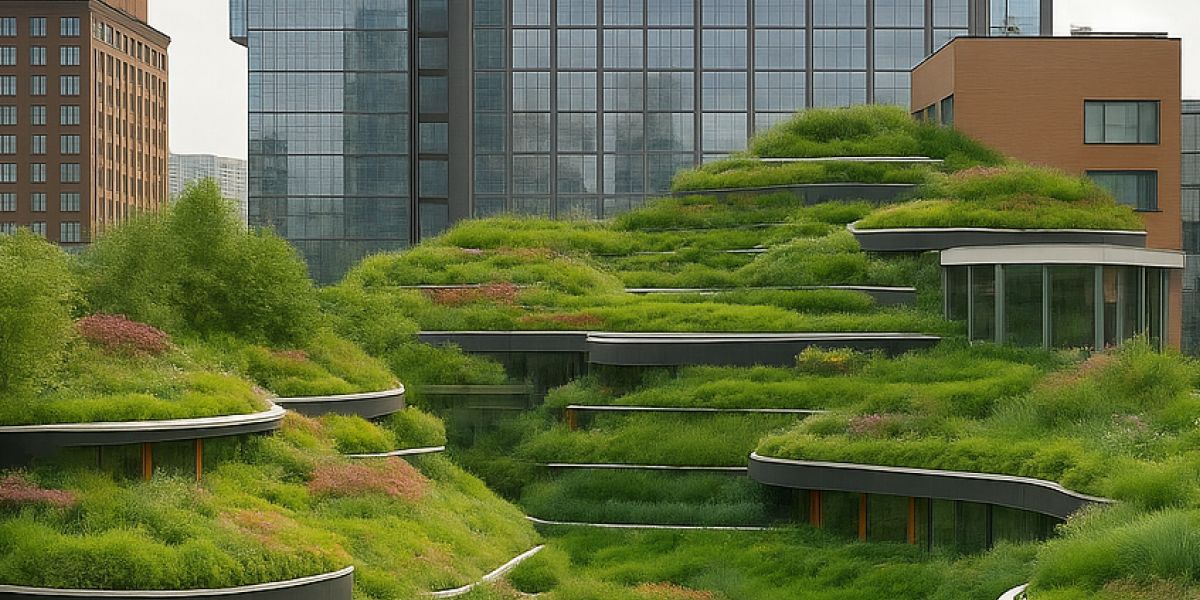


When we think of cities, we often picture concrete, transport, and infrastructure — the things that sustain human activity. But nature rarely takes center stage in that vision.
Today, I had the honor of participating in the 7th GE-EN-VIE meeting, held at the Maison Internationale de l’Environment in Geneva. This event was not just another environmental discussion. It was an attempt to reimagine the landscape — not as a backdrop to our lives, but as an active co-creator of our shared future. GE-EN-VIE #7 became a powerful platform where urbanism, ecology, science, and sociology came together to explore a simple yet revolutionary question: Can a city be alive?
This wasn’t your typical technocratic conference — it was a space where landscapes stopped being maps and transformed into complex, interdependent systems of which we are all a part.
Agglomération #5: Not a boundary on a map, but a living organism.
The spatial development model of Agglomération #5 was not just a collection of schemes or blueprints. It was a way of storytelling through space:
– ecological corridors for nocturnal wildlife,
– acoustic maps visualizing urban noise,
– urban food sovereignty systems enabling access to locally grown food,
– preservation of local biodiversity even in densely built-up areas.
This is a completely new vision of a city — as a holistic, living, interconnected organism, where there are no “unnecessary” elements and no divide between “nature” and “the human.”
As a researcher and founder of an environmental foundation, I was deeply moved by how food security was integrated into the region’s broader territorial development strategy. In Greater Geneva, the conversation is no longer about imports — it’s about creating the conditions for local food cultivation even within city limits: through composting systems, urban gardens, and community engagement.
Soil that doesn’t exist — yet we create it.
One of the most powerful moments was the presentation of a unique pilot project focused on creating living soil from construction waste.
At first glance, it sounds far-fetched — how can rubble be transformed into life-supporting soil? And yet, over 3 million tonnes of construction soil and rock waste are generated in Geneva every year. Researchers from HEPIA and the Cantonal Office for Environmental Protection didn’t just ask the question — they tested it.
On an experimental site, glacial moraine deposits were mixed with compost, and the following parameters were tracked:
– water retention and permeability,
– microflora and root development,
– adaptability of native and ornamental plants,
– temperature behaviour and weather resilience.
The first year already delivered fascinating results:
– with 50% compost, plant growth was vigorous,
– with lower organic content, tougher wild species thrived — less aesthetic, but resilient,
– with high compost content — lush vegetation emerged, but with a risk of invasive species,
– the best balance occurred in mixed conditions where natural strategies could interact.
Quick note: Moraine is a geological mix of clay, sand, gravel, rocks, and boulders formed by melting glaciers — essentially everything a glacier “collected” and left behind as it retreated.
This experiment confirmed something essential for me: ecological engineering is not the future — it is already the present. In an urbanized world, we often have no choice but to recreate nature artificially — but with deep respect for its logic.
The limits of consumption — a new collective imagination.
One of the panels was dedicated to the theme of a just transition. This isn’t only about changing transport, diets, fashion, or energy use. It’s about reimagining what a happy, dignified, sustainable life looks like.
A fascinating concept emerged from a study involving citizens of the Geneva region: consumption corridors.
– On one end — the minimum needed for a dignified existence,
– On the other — the maximum we can consume without harming the planet or others.
This acknowledges that consumption is not just about individual choice, but a cultural practice shaped by education, policy, and social norms. And most importantly — not every individual act of “heroism” will change the system, but collective, community-driven decisions can.
Global responsibility: a green transition without hypocrisy.
At the close of the day, a question was raised that still echoes in my mind: How can we speak of ecological transformation in Geneva when most of what we enjoy here is imported at the cost of other regions?
Food, furniture, technologies — even bicycles — all come with a global ecological footprint.
Our “green transition” means little if we ignore:
– where materials come from,
– Labor conditions in the countries of production,
– environmental impact across other regions.
This is the real challenge: to think globally even when acting locally. That’s why it’s essential that environmental considerations are woven into not only ecological, but also economic, social, and urban policy strategies.
GE-EN-VIE #7 offered me more than knowledge — it gave me a clear conviction:
Ecological transformation isn’t a bundle of technologies — it’s a new vision of life. A process where soil, playgrounds, food, traditions, trees, and stories are all equal building blocks of the future. And that future begins where we’re willing to see the connections between ecosystems, people, and spaces.
Support Glossary Eco Foundation so we can continue educational and eco-friendly projects that make real difference
Donate