How to talk to children about ecology: a practical guide for parents and teachers


Environmental awareness does not arise instantly – it is formed every day, through simple conversations, observations and your own actions. The earlier we start talking to children about the environment, the more responsible citizens they will grow up to be. But how to do it right? Start with conversations, but don’t intimidate. It is important for children to know that the environment is under threat today – due to air pollution, deforestation, climate change. But even more importantly – to understand that their actions matter. Instead of intimidating with apocalyptic scenarios, you should say:
“Yes, the planet is facing difficulties. But you can help. We all can. And many people around the world are already doing it.”
Your own example is the most powerful tool. There is no better environmental education than your behavior. If you yourself use reusable bags, do not throw garbage on the street, sort waste, do not buy unnecessary things – the child sees this. Don’t expect your child to be “green” if they hear one thing and see another.
Ask yourself:
– Did my son see me turn off the lights in an empty room?
– Does my daughter know why we buy local products?
– Did I explain why we keep the beach clean?
Give examples from the local to the global. A child understands better when we talk about things they can see or imagine. Start with the local:
– “See how polluted this river is? But here the neighbors cleaned up the coast together.”
– “Here at our school they collected 200 kg of paper – that saved a few trees.”
And then expand your horizons:
– “In Kenya, children plant trees every week. And in Sweden, almost all garbage is recycled. You too can be part of the change!”
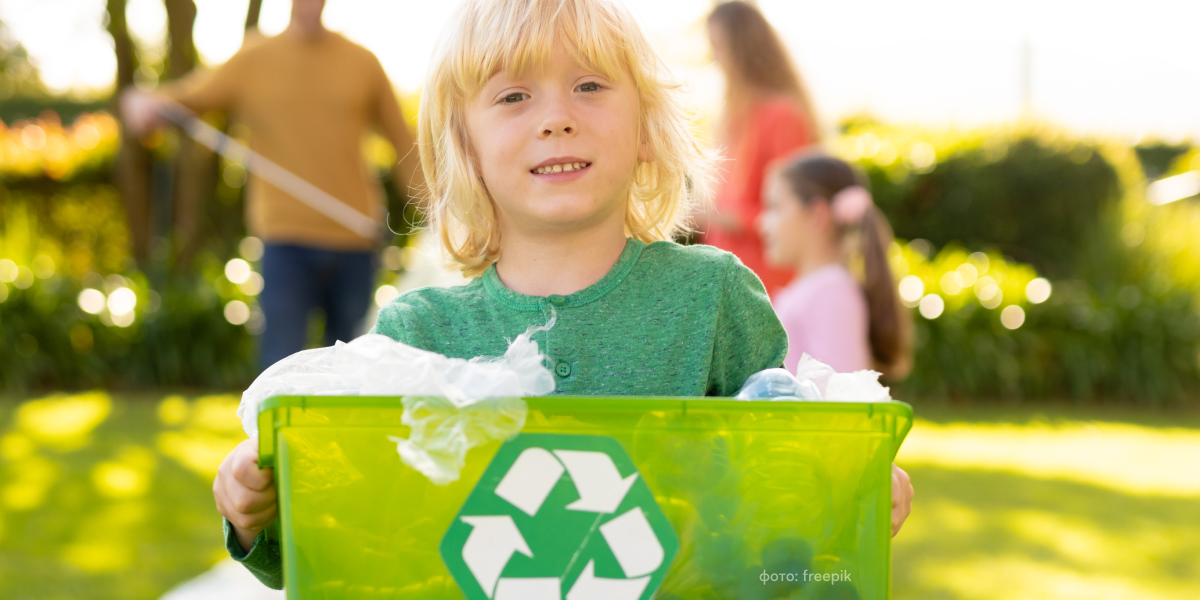
Joint actions are more effective than lectures. Invite your child to do the following together:
– collect batteries for recycling
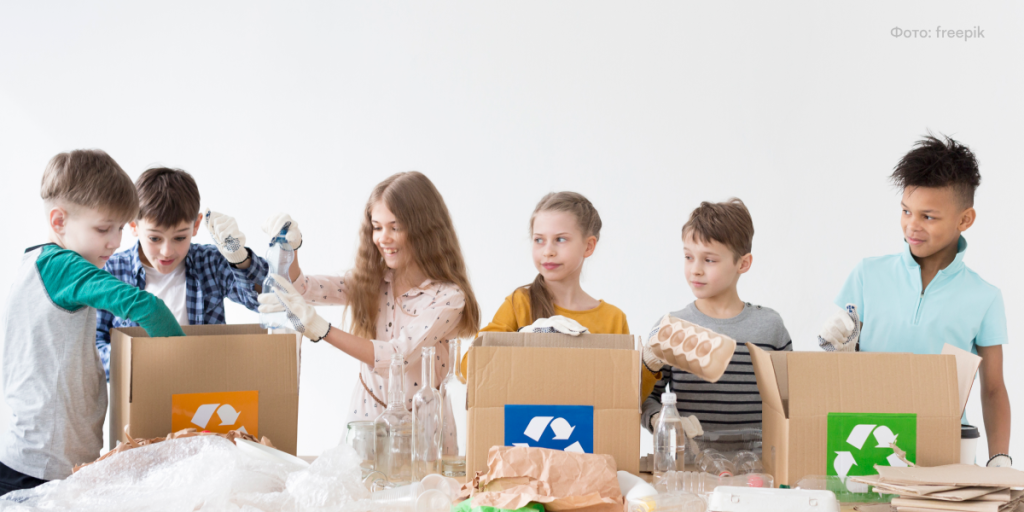
– sort plastic and paper at home
– plant a tree or at least basil in a pot
– do upcycling: turn an old thing into a new one
Such actions are not only about the environment, but also about forming the habit of thinking, noticing, and caring.
Use books, cartoons, and stories. Children think in images. Fairy tales, books, and films help to “revive” concepts — and change behavior. We recommend paying attention to:
– “Home” by Yann Arthus-Bertrand (a documentary with stunning nature)
– “WALL-E” — a touching cartoon about the future of the planet
Always leave room for hope. Yes, the environmental challenges are huge. But even a child can be part of the solutions. The main thing is to let them feel it. Small changes multiply if millions of people make them. Children are not just listeners, but creators of the future. And the first step to a conscious attitude towards nature is a warm dialogue in the family.
Support Glossary Eco Foundation so we can continue educational and eco-friendly projects that make real difference
Donate