Growing crisis: Why the profession of ecologists should come out of the shadows


The world stands on the threshold of grand changes, and amid this transformative landscape, Ukraine faces a conscious choice – to align its future with environmental sensitivity. In this journey, the ecologist plays a crucial role as a guide and guardian of sustainable development.
Ukraine confronts a complex mosaic of environmental challenges on a daily basis. The looming shadow of industrialization, combined with everyday life, has ushered in an era of industrial and household waste accumulating in millions of tons without proper processing over the years.
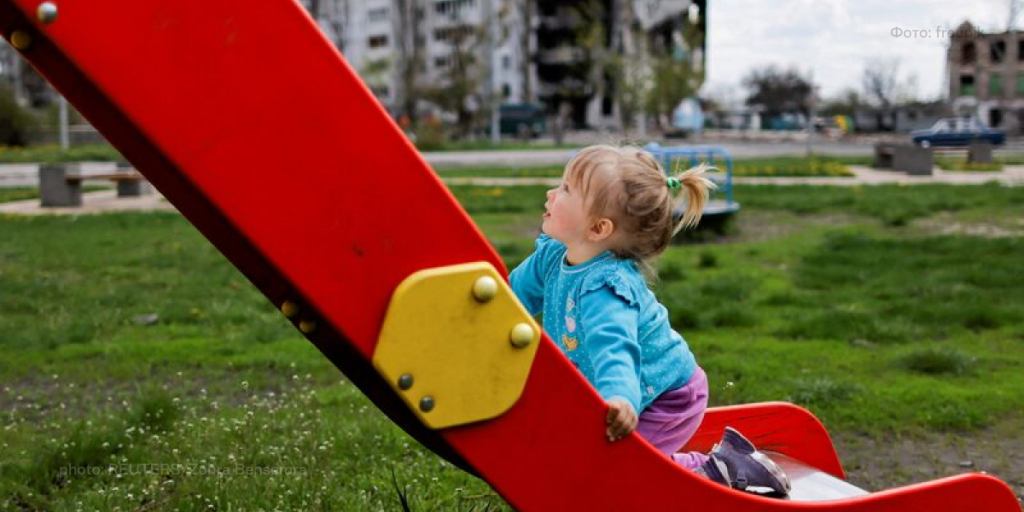
The full-scale invasion of Russia into our country has further worsened this landscape: the destruction of the Kakhovska Hydroelectric Power Station, shelling of cities and minefields in fertile fields, the vulnerability of nuclear power plants, and the alarming consequences of chemical weapons and mass burials.
As Ukraine aligns with European principles, this stark picture underscores the urgent need for a turn towards environmental consciousness. It is more than a geopolitical stance; it is a fundamental reassessment, a commitment to shift old paradigms, placing the environment on equal footing with development.
With the onset of post-war reconstruction, environmental challenges will be even more pronounced. These efforts could become a source of ecological harm, as the widespread use of building materials such as concrete will significantly strain the environment. In the face of these environmental issues, ecologists must play a vital role, intervening and paving the way for ecological alternatives.
However, in Ukraine, the profession of an ecologist faces internal challenges. While significant efforts are directed towards addressing the environmental consequences of war, it is crucial to begin investing in research, ecological projects, and raising the level of environmental policy, thereby enhancing the importance and value of the profession for the younger generation. Misconceptions about employment prospects persist, exacerbated by weak communication from companies and their inability to recognize the critical role of ecologists in modern industry. Additionally, there is a noticeable lack of societal respect for a field that likely stems from general unawareness of its immense contribution to well-being and sustainability. As a result, fewer students are drawn to this socially significant profession.
This conclusion stems from a small-scale study conducted during this year’s admission campaign. For example, at Taras Shevchenko National University of Kyiv, only 76 applications were submitted for the “ecology specialty,” while 1105 and 2215 applications were submitted for “international relations” and “law,” respectively.
A similar situation was observed in other universities. At the National University of Kyiv-Mohyla Academy, there were 66 applications for “ecology,” 613 for “international relations,” and 973 for “law.” Lviv Polytechnic National University had 98 applications for “ecology,” 704 for “international relations,” and 1371 for “law.”
The modern ecologist is not a passive observer but an active participant in shaping Ukraine’s environmentally conscious future. Their experience ensures that the country’s reconstruction proceeds without harm to the sanctity of natural treasures.
However, the path to ecological balance is not solely in the hands of eco-professionals. Each of us plays an equally important role, from simple daily practices such as water conservation and responsible waste management to joining environmental movements. Collective efforts can have a significant impact.
In an era marked by rapid changes and uncertainty, Ukraine’s emphasis on the indispensable role of ecologists is a testament to its commitment to sustainable development. A modern ecologist in Ukraine is not just a career choice; it is a declaration of allegiance to harmonious coexistence between progress and nature.
Support Glossary Eco Foundation so we can continue educational and eco-friendly projects that make real difference
Donate