Solar energy as a strategic alternative: the Ukrainian context and the response to a multidimensional crisis
20.07.2025
#Energy
4 min reading
Share:


In today’s world, solar energy in Ukraine is no longer just a climate priority, but a critical component of security and survival. Russia’s full-scale invasion has exposed the vulnerability of the centralized power system. Hundreds of attacks on generation and transmission facilities have caused long-term outages, threatening the functioning of healthcare facilities, schools, businesses, and households. It is in this context that renewable energy sources, including solar power plants (SPPs), are proving to be not just an ecological alternative, but a backup pillar of critical infrastructure capable of operating autonomously in the face of disruptions and destruction.
War as a catalyst for energy decentralization. According to AP News, more than 50% of Ukraine’s installed capacity of traditional generation has been damaged or destroyed as a result of military operations. In such conditions, decentralized, local solutions — in particular, solar power plants on the roofs of educational institutions, hospitals and administrative buildings — have become the most effective response. Mobility, relative ease of installation and lack of dependence on a single network allow solar installations to quickly provide facilities with electricity even after serious damage to the central system.
Climatic advantages and energy potential of Ukraine. According to Greenpeace estimates, even 1% of the country’s usable area can provide 100% of the country’s current electricity needs through solar and wind generation. The average level of solar insolation in Ukraine is 1,800–2,200 hours per year, which makes our country suitable for the widespread introduction of photovoltaic technologies even outside the southern regions. The potential of solar energy is not only a technical or economic opportunity. It is a strategic resource that allows us to build an energy-independent state.
Economic efficiency and social impact. Investments in solar energy create thousands of new jobs, especially in the regions. According to Greenpeace, by 2030, more than 20,000 new jobs may appear in the renewable energy sector in Ukraine alone. In addition, energy production at the point of consumption allows you to reduce transportation losses, as well as reduce the costs of communities for electricity. It is also important that solar energy is predictable in cost: compared to unstable prices for gas, coal or imported electricity, the sun is a resource that does not depend on geopolitics or logistics.
Institutional support and global partnerships. Against the backdrop of military realities, Ukraine attracts international partners to implement new solar solutions. In 2025, DTEK and Octopus Energy announced the joint implementation of 100 solar power plant and energy storage projects in Ukrainian communities for a total of 100 million euros. According to The Times, these initiatives are expected to reduce bills by 10–25% and ensure stable power supply to important facilities.
Environmental benefits as part of the energy transition. Solar power plants are zero greenhouse gas emissions during operation, reducing dependence on fossil fuels and improving air quality. In the context of the climate crisis, this factor is no less important than energy autonomy. According to UkraineInvest, in 2023 the share of “green” generation in Ukraine’s energy balance reached 22%, and this figure continues to grow, despite the challenges of war.
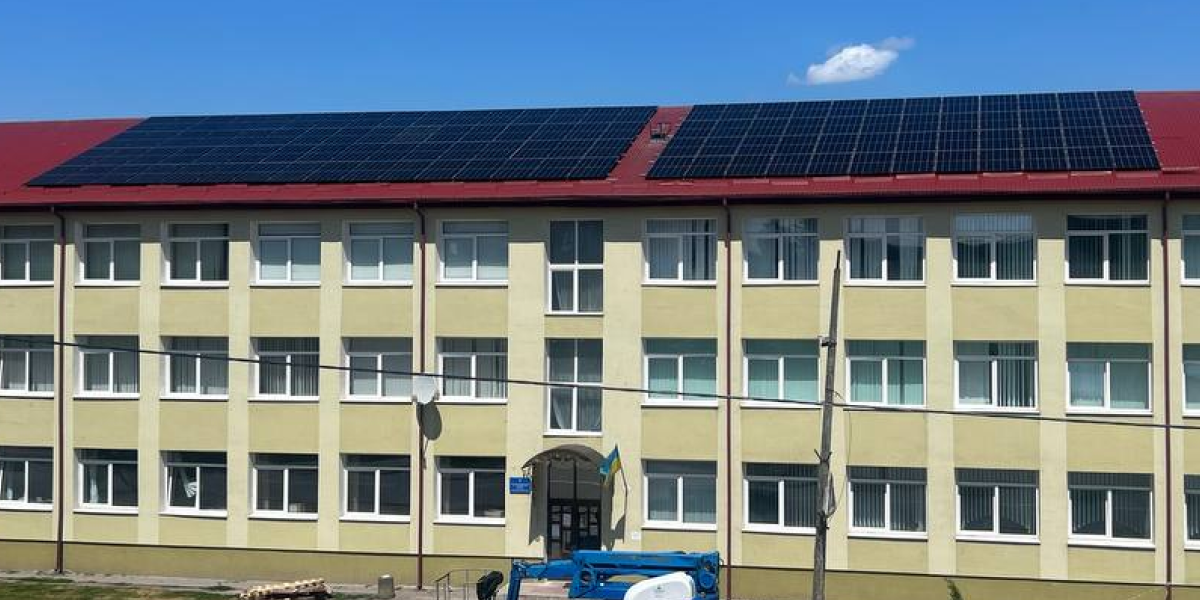
Example of implementation: the “School under the Sun” project. In response to the challenges of war and the climate crisis, the Glossary Eco Foundation is implementing the “School under the Sun” project, the goal of which is to provide Ukrainian schools with the opportunity to work regardless of external circumstances. As part of the project, schools receive their own photovoltaic installations, which allow them to provide:
- backup lighting in shelters;
- stable operation of the educational process even during blackouts;
- reduction of electricity costs;
- formation of an ecological worldview of students and teachers.
At this stage, the installation of a solar power plant on the roof of a secondary school in the city of Monastyriska, Ternopil region, is being completed.
Solar energy is not a “green dream,” but Ukraine’s strategic response to a multi-layered crisis: military, energy, economic, and climate. In a country with such potential as Ukraine, implementing local solutions is not just about technology, but about people, about the future, and about how to build brighter times even in the darkest moments.
Support Glossary Eco Foundation so we can continue educational and eco-friendly projects that make real difference
Donate