Water as a Weapon
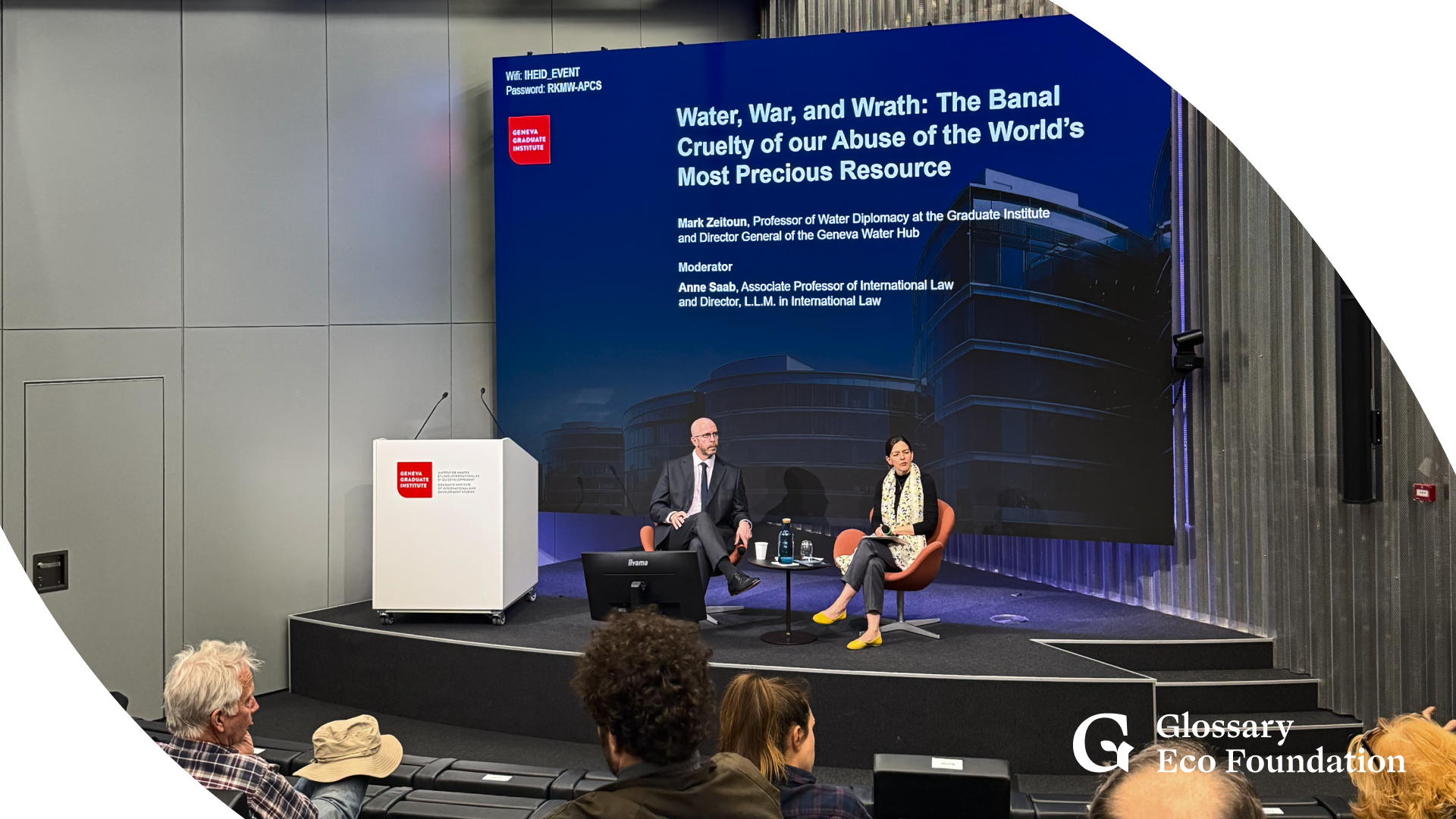


War as a Poisoned Environment. “Today I listened to a speech that made it hard to breathe. Professor Mark Zeitoun, a water security expert and CEO of the Geneva Water Hub, spoke at a conference in Geneva about more than just water. He spoke about how water is being turned into a weapon,” says Anastasia Tsybuliak, founder of the Glossary Eco Foundation, a scientist.
Water = weapon.
This is not a metaphor. This is the reality that many countries experience during armed conflicts. He mentioned Georgia, Yugoslavia, South Lebanon, Gaza and, of course, Ukraine and the Kherson region. Kakhovka Hydroelectric Power Plant: An Ecocide That Could Have Been Predicted. The explosion of the Kakhovka Hydroelectric Power Plant is one of the largest acts of ecological terrorism in modern history. This is not just water that flooded houses and washed away crops. This is not just tens of thousands of people left without drinking water.
This is a disaster that was planned. Such acts always have long-term consequences. The land will no longer produce. Drinking water will become poison. People who are not killed by the explosion may die from infections and lack of resources. As has happened in other conflicts where water has been deliberately mixed with blood and manure.
These are stories that repeat themselves. Mark Zeitoun reminded us that this is not a new tactic:
•In Yugoslavia, wells were used as mass graves, not just to destroy people, but to make it impossible for life to return to these places.
•In Gaza, water has long carried not only life but also death. It is mixed with sewage, antibiotic-resistant bacteria, poverty, fear and despair.
•In southern Lebanon, water infrastructure was deliberately bombed so that people would not be able to survive.
War is not only about weapons. It is also about diseases.
When clean water disappears, something worse than bullets appears. These are dysentery, hepatitis A, cholera and other infections that spread rapidly because there is no way to maintain basic hygiene. “If the debris doesn’t kill you, the microbes will. If not, the infection. If you survive, the toxins. All of this will take years. And all of this is completely predictable,” says Mark Zeitoun, a professor of water security research.
Hygiene as the last frontier of humanity.
Even under bombardment, engineers in Gaza are trying to at least separate the water and sewage pipes, understanding that water without hygiene becomes a weapon of mass destruction. And I think of Kakhovka. Of the Ukrainian engineers who tried to restore the water supply. Who died trying to stop the destruction. Of the people who were left without water. Of the land that will no longer bear fruit. Of the people it will kill — not today, but over time. This is not just war. This is ecocide. This is not just a violation of the laws of war. This is a disregard for life itself. Water is not just a resource. It is a test of humanity. And the world is failing this test miserably today.
How to hold an aggressor accountable for environmental crimes?
In many post-conflict situations, the burden of restoring water ecosystems and infrastructure falls entirely on the affected countries, while aggressors often evade responsibility. Given the events in Ukraine — in particular, the destruction of the Kakhovka hydroelectric power station and the pollution of rivers — how can the scientific community contribute to the creation of international mechanisms that oblige aggressor states to compensate for environmental damage and participate in the restoration of destroyed water systems? Are there ways to transform scientific knowledge into legal or diplomatic tools to hold such states accountable?
Professor Mark Zeytun responded: “Holding an aggressor accountable for environmental crimes depends on the geopolitical situation and the availability of political will. Once the conflict is over and there are processes of reconciliation and acknowledgement of the damage, environmental restoration becomes a matter of time and significant resources. He mentioned the Kakhovka hydroelectric power station explosion, noting that organizations such as Justice Rapid Response provide legal support for the analysis of such cases. However, building political will remains a key factor, and this is a difficult task that requires significant effort and time.”
Building political will is a key factor that requires effort and time.
Ukraine is already paying the price for this war.
Support Glossary Eco Foundation so we can continue educational and eco-friendly projects that make real difference
Donate