Citizen science, not only civil society


The Ecocloud project spoke with Ukrainian researcher Ruslan Gunko to find out what citizen science is and how this phenomenon can affect people’s quality of life.
What is citizen science?
To put it very briefly and simply: this is a branch of science where data collected with the help of ordinary people play a major role. They can have very different motivations for getting involved, ranging from a hobby-based interest or enthusiasm (very common among birdwatchers), a motivation to learn something new, a desire to spend time in a group of people with common interests, a desire positive changes (especially often this happens if the project concerns a village, town or residential area) or simply participation in the project due to personal interest. In citizen science, ordinary people are this source of data, which is then used by professional scientists. Of course, this data, if possible, is very carefully checked for compliance with standards. For example, there is a huge eBird project where bird enthusiasts share their bird sightings (namely migration) and report what species they have seen at a given time in a given geographic location. All data is checked by moderators (or an automated system) to exclude spam, which may include certain species that simply cannot physically and evolutionarily be in that location, or to exclude, for example, birds in captivity (zoos). In various areas of citizen science, there is a system for checking the compliance and reliability of data. Of course, with all the pros (and cons), citizen science will not replace professional scientists, but it is a chance for more effective data collection, expansion of opportunities and involvement of society in science (popularization), in other words, an opportunity to build a “bridge” between science and other areas our life
Citizen science is changing how society contributes to research projects around the world. Please explain the principle of formation of this phenomenon?
Very often, science and society are separated from each other, and this creates a layer of misunderstanding, and can also have various negative effects (for example, provoke a sharp increase in the number and popularity of “conspiracy theories”). Including people in scientific processes at the data collection stage is a chance for communication and building win-win relationships. It is very difficult to argue with the fact that more about the environment, visible changes in it over a certain period of time and information about a certain historical background are possessed by people who have lived for a long time in a certain place and have a certain emotional and physical connection with it. Of course, in any case, one must be very careful with the data collected in this way, because there are many factors that can influence a person in the process of providing information or evaluating certain environmental indicators. Sometimes, when the project requires very accurate data and professional adherence to certain scientific protocols (for example, water quality monitoring using professional equipment), scientists conduct special trainings for people who are interested in participating in the project. Nevertheless, even a simple assessment of certain environmental indicators, a sufficient number of participants in this process and a certain representativeness can provide scientists with data of sufficient quality for use in research or for reference in the process of communication with officials of various levels or politicians.
How can scientists change the average person’s perception of ecology through citizen science?
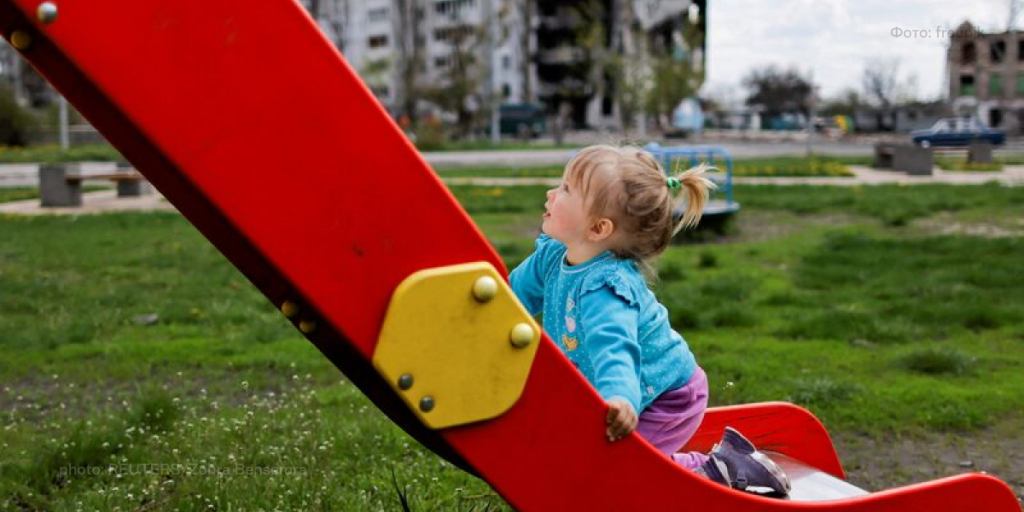
The detachment of many people from science or the lack of communication with scientists or workers of environmental organizations is one of the reasons for the very limited attention to the environment among Ukrainians. Of course, nowadays there are many objective reasons for the reduced attention to the country’s ecology, but we must remember that the war affects not only people’s lives, physical and mental health, their lifestyle and finances. One of the biggest negative consequences of war is its negative impact on ecology and even access to nature. This is especially noticeable in places where the occupiers left their black trail, which includes not only dangerous garbage, ammunition remnants, etc., but also mines, unexploded shells, etc. The latter are often the cause of limited access to nature. Therefore, we have to be multitasking and already think about the future, where one of the pillars should be building the maximum ecological perception and relationship to nature. One way is to involve people in the process, for example, by encouraging their participation in citizen science. It can be especially useful for a complete picture of all the negative phenomena brought about by hostilities, an understanding of how the human-nature relationship has changed due to war and access to information/data from areas where there is limited access to scientists due to hostilities, proximity to the front or security measures. The other side of this process is that the feeling of involvement in scientific processes will stimulate people to expand their knowledge, understand the objective side of the value of nature and build a feeling of “I am part of the change”.
How can ecologists influence citizen science and explain to ordinary people what they need?
Communication through very broad engagement of various resources. It is necessary to understand that there is no universal method and a person’s decision always depends on a whole range of factors that cannot always be influenced. In my personal opinion, it is necessary to build a certain communication strategy, but implement it at a very local level, because people are very often “detached” from global messages and listen more to environmental communication regarding their region, district, city, village, where they feel stronger connection with nature. It is also very important to build cause-and-effect relationships so that people understand why they should participate in community science projects and what it can bring to them personally and to the community. Our society is very critical of many initiatives where the entire chain of processes is not clearly visible, and therefore there is a certain lack of communication regarding the tasks and potential results of such projects.
How can citizen science change the world?
First, very often citizen science is associated with the method of efficient collection of a sufficiently large amount of data, which researchers would not be able to master purely physically. Moreover, I will emphasize the characteristic “effectively” here. We very often forget that every scientific project requires funds for implementation and very often very large ones. Yes, technological progress does not stand still and we have already learned to use new technologies to collect data. For example, in Finland there is the CoastRider project, where a group of scientists uses the Exo 2 Multiparameter Sonde technology. To put it very simply, the tool includes a set of sensors that are calibrated and attached to the boat. After that, the boat moves along the path determined by the scientist and automatically collects data on the quality of the coastal water. Of course, the price of such technology is not cheap, and we must not forget about the working time of the scientist who has to control both the instrument and the boat. For a municipality that is located in an archipelago or has a long coastline, this type of environmental monitoring can be very expensive. That is why in our project we made an attempt to compare the quality of data collected with the help of professional equipment and data collected through the method of citizen science (people were asked to evaluate the quality of coastal water with a spatial reference). The results of our research have shown that undoubtedly the most accurate data can be obtained using professional scientific equipment. Nevertheless, ordinary people living in the municipality where the research was carried out showed a clear understanding and ability to evaluate water quality on a simple scale, and therefore with a high probability to identify places of increased monitoring (so-called hotspots) in the future. Thus, the involvement of people in scientific processes not only popularizes the scientific approach among them, but also enables officials to use technology effectively for the municipality’s budget. Moreover, it is a great signal for the local council, which should stimulate the involvement of the community and its members in the decision-making regarding the environment of the municipality.
How do you think citizen science can be developed in Ukraine?
This is a very philosophical question, because like every method, citizen science has its pros and cons. First of all, it should be remembered that this is “not a panacea for all diseases.” It is only a method to be used when needed. Moreover, as with everything, data collected through citizen science should be treated with some healthy criticism. Namely, to check their reliability and compliance with world scientific standards.
Nevertheless, it is a great opportunity for scientists, especially nowadays, to collect a large amount of scientific material. In times of war, ecologists are often limited in their access to data or specific locations, so citizen science offers a chance to empower scientists. It is also a chance to provoke positive processes in society regarding ecology. Nothing motivates change like understanding the situation and being involved in the process. And therefore, it is also an opportunity to stimulate a healthy discussion in society about the importance of the environment and the strategy of sustainable development, increasing attention to the environmental policy of the state in general and locally, raising an ecologically educated generation.
Support Glossary Eco Foundation so we can continue educational and eco-friendly projects that make real difference
Donate