Sorting is good. But reducing consumption is necessary

30.07.2025
#Analytics
3 min reading
Share:


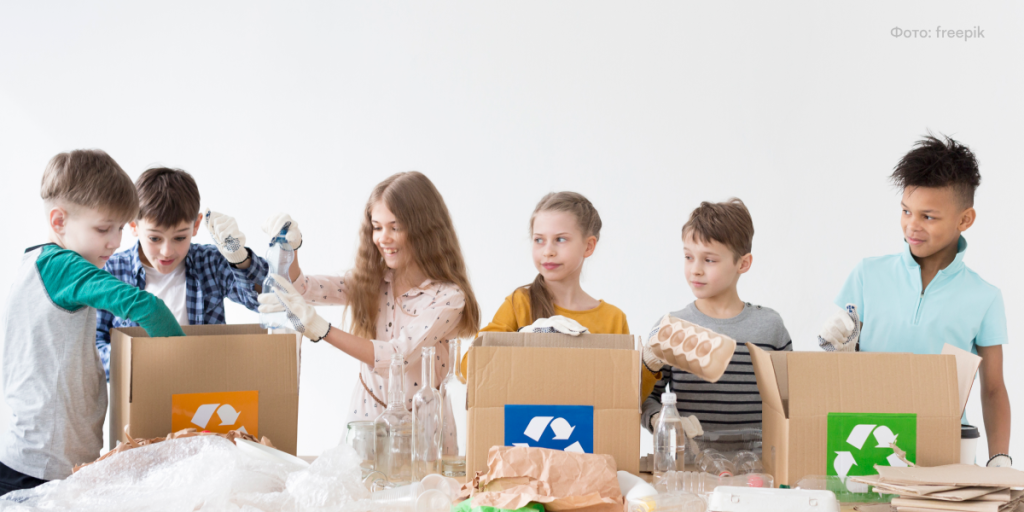
In recent years, more and more people in Ukraine have been involved in sorting waste. This is a positive step that indicates the growth of environmental awareness. But it is worth understanding: sorting is not a solution to the problem, but only its final stage. If we really want to reduce the negative impact on the environment, we must change the very logic of consumption. Today we live in conditions of overproduction and overconsumption. Every day, millions of pieces of clothing, packaging, appliances, furniture, and disposable goods are produced in the world.
It seems that sorting gives these things a second chance. But in reality:
• Only 9–17% of plastic in the world is actually recycled. The rest is burned, ends up in landfills, or decomposes in nature for tens and hundreds of years.
• Not everything that seems suitable for recycling is actually so. Many types of packaging (for example, tetrapack, film, multilayer plastic) are not actually recycled due to the complexity of the composition or lack of technology.
• Recycling is also a consumption of resources. To melt, clean and transport materials, energy, water, fuel, infrastructure are needed. This process leaves its own carbon footprint.
• Only 9–17% of plastic in the world is actually recycled. The rest is burned, ends up in landfills, or decomposes in nature for tens and hundreds of years.
• Not everything that seems suitable for recycling is actually so. Many types of packaging (for example, tetrapack, film, multilayer plastic) are not actually recycled due to the complexity of the composition or lack of technology.
• Recycling is also a consumption of resources. To melt, clean and transport materials, energy, water, fuel, infrastructure are needed. This process leaves its own carbon footprint.
These processes are especially clearly visible in the example of plastics. Global plastic production is doubling every 10–15 years. If in the 1950s the world produced only 2 million tons of plastic, then in 2023 this figure reached more than 400 million tons per year. Half of all plastic created in the history of mankind was produced after 2004. And most of it is disposable products and packaging. The more we buy – even if we sort it later – the greater the demand for production. And this means – more resources are extracted, more energy is consumed, more emissions are released into the atmosphere. Sorting does not stop this system. Reducing demand – stops it.
That is why reducing consumption is the most effective and responsible step in the fight against the environmental crisis.
What you can do now:
• Rethink your habits: buy less, but better quality.
• Choose reusable items instead of disposable ones.
• Avoid unnecessary packaging where possible.
• Repair things instead of throwing them away.
• Support brands that implement a sustainable approach to production.
• Before each purchase, ask yourself: do I really need this?
What you can do now:
• Rethink your habits: buy less, but better quality.
• Choose reusable items instead of disposable ones.
• Avoid unnecessary packaging where possible.
• Repair things instead of throwing them away.
• Support brands that implement a sustainable approach to production.
• Before each purchase, ask yourself: do I really need this?
Sorting is the end of a thing’s journey. But it all starts much earlier: with our choice in the store, on the marketplace or in the supermarket. We will not be able to solve the problem of waste until we change the culture of consumption. Consuming less means saving more. And taking care not only of the environment, but also of the future in which we want to live.
Support Glossary Eco Foundation so we can continue educational and eco-friendly projects that make real difference
Donate