Digital Transformation of Agriculture: Challenges We Must Tackle Today
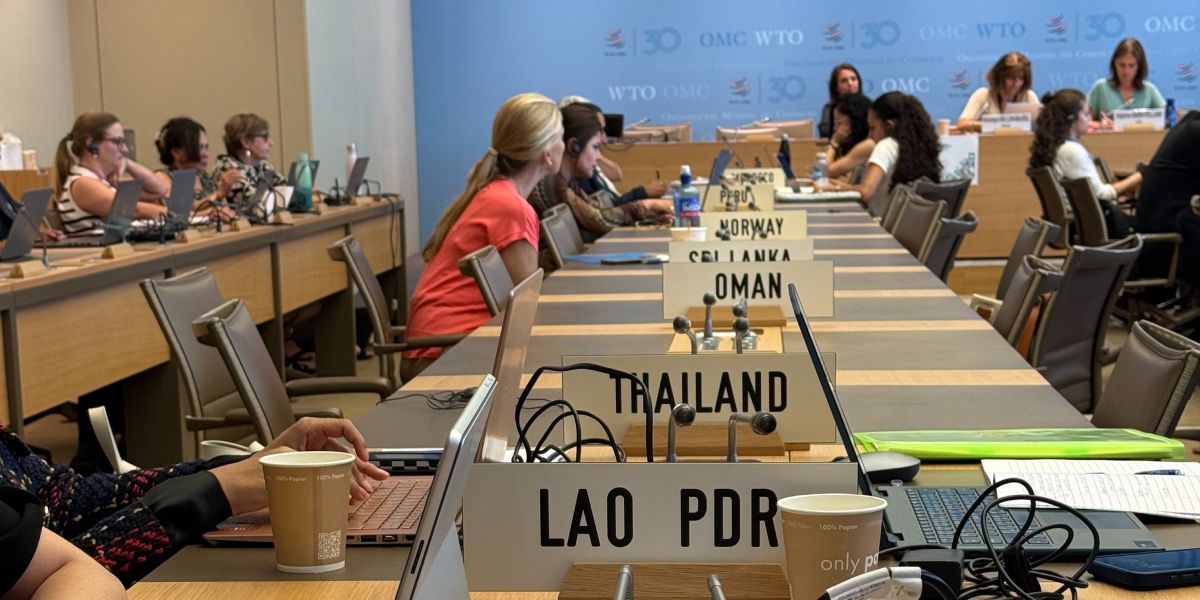


On June 30, 2025, Trade & Environment Week kicked off in Geneva — an annual international initiative by the World Trade Organization (WTO) dedicated to sustainable food systems, digital innovation in the agricultural sector, and the ecological transformation of trade.
This year’s program includes over 15 thematic events, such as panel discussions, presentations of national strategies, and real-life case studies of technological implementation. Key topics include climate risk adaptation, development of environmentally responsible supply chains, and digitalization of agriculture.
Among the participants at the opening session was Dr. Anastasiia Tsybuliak, founder of the Glossary Eco Foundation and scientist representing Ukraine. Notable attention was drawn to the presentations from France and Morocco — two countries demonstrating fundamentally different yet effective approaches to agricultural digitalization.
France showcased the work of the National Research Institute for Agriculture, Food and Environment (INRAE), which integrates innovation across the agri-food sector: from soil sensors to precision irrigation systems, from robotic milking to AI for early livestock disease detection. Morocco, on the other hand, impressed with the scale and depth of its approach: the “Génération Green 2020–2030” strategy reaches over 1.7 million farmers — about 37% of the country’s population. Farmers benefit from mobile hubs, decentralized digital solutions, insurance, human capital development, and access to affordable technologies.
One example: farmers can ask agricultural questions via simple voice messages in their local language through WhatsApp, facilitating rapid adoption even in remote regions.
Anastasiia Tsybuliak shared her insights:
“Digitalization is not just about efficiency and data. It’s about trust, language, context, simplicity, and a human-centered approach. If a farmer finds it confusing or difficult — it’s not innovation. If they don’t feel a difference — the system isn’t working. We must learn to co-create solutions with people on the ground, not just impose them from the top.”
She also pointed out that even in countries with advanced digital infrastructure like France, the agricultural sector’s access to cutting-edge technologies rarely exceeds 50%. The reasons vary — from a basic lack of 4G coverage to distrust, complex user interfaces, and a lack of hands-on training. In her view, these challenges are highly relevant for Ukraine — a country that, despite the ongoing war, urgently needs sustainable, accessible, and people-friendly technologies. Ukrainian farmers have immense potential, deep love for the land, and strong motivation to work. Technology should empower them, not alienate them.
“Even sitting in the WTO hall with a breast pump under my blazer, I felt: digital transformation is not some abstract thing. It’s about my life, about our farmers, about our right to a dignified future. And that’s why, as a public environmental foundation, we advocate for a transformation that combines science, innovation, and genuine respect for people and nature.”
Glossary Eco Foundation continues to champion fair agricultural policy and green innovation for Ukrainian communities. The insights gained in Geneva will become an important part of our upcoming initiatives — for both local farmers and national-level solutions in ecology and sustainable agriculture.
Support Glossary Eco Foundation so we can continue educational and eco-friendly projects that make real difference
Donate