The Swiss Alps are collapsing – up to 90% of glaciers could disappear by 2100
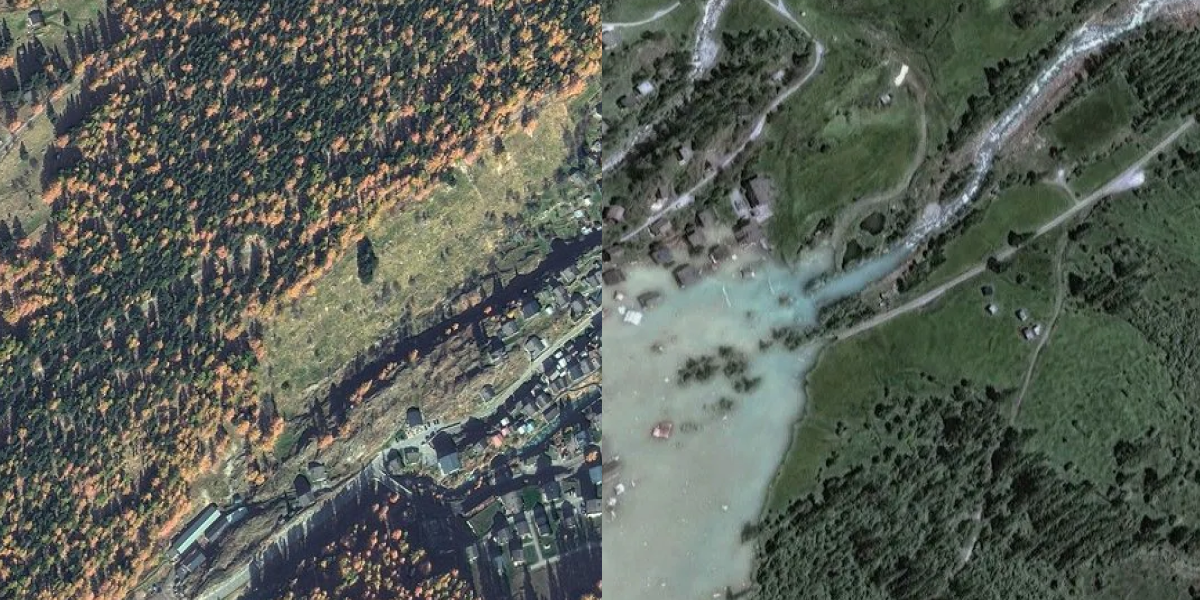


In the Swiss village of Blatten, a giant landslide descended from the Kleine Nesthorn mountain – more than 9 million cubic meters of debris and ice blocked the valley, forming a temporary lake that has already flooded homes. One resident is missing, more than 300 people have been evacuated. And all this is a consequence of melting glaciers due to climate change.
Why is this important? Natural risk experts in the canton of Valais warn that with intensive melting of ice, mudflows and “water pockets” can form – invisible accumulations of water inside the mass of debris. In an unfavorable scenario, they can break through, causing significant damage to settlements downstream. Such scenarios are considered likely in conditions of increased temperatures and precipitation.
The reason? The climate crisis. Melting glaciers due to global warming make mountains unstable. Small landslides are becoming more frequent, and large disasters are becoming more real. Not only the Alps are at risk, but also other high-altitude regions of the world, including the Caucasus, the Himalayas, and the Carpathians.
This is not the first case. And it will not be the last.
▪️ Italy, 2022 – a giant piece of ice broke off from the Marmolada glacier in the Dolomites. 11 people died.
▪️ Switzerland, 2017 – a landslide on Mount Piz Canu in the canton of Graubünden killed 8 climbers.
▪️ Himalayas, India, 2021 – a glacier broke into the Rishi Ganga river valley, causing a mudslide that destroyed a dam and killed more than 200 people.
▪️ Pakistan, 2023 — Dozens of houses and roads in the Gilgit-Baltistan region have been destroyed by melting mountain glaciers and flash floods.
They all have one reason in common — global warming. Glaciers are melting faster, soils are thawing, and mountain ranges are losing their stability. Even small amounts of precipitation or heat waves can trigger catastrophic processes.
What scientists and environmentalists say:
According to the IPCC, up to 90% of glaciers in the Alps could disappear by 2100.
The Swiss Snow and Avalanche Institute predicts an increase in the instability of mountain slopes and an increase in the frequency of landslides.
The European Space Agency (ESA) is recording more and more movements of mountain masses thanks to satellite data — even in regions that were previously considered stable.
In the Carpathians (particularly in Romania and Ukraine), signs of permafrost degradation and rock instability are already being observed.
What does this mean for us?
Mountains are not just about tourism and scenery. They are sources of fresh water, climate stability and life for millions. Their destruction is a warning about how deeply we have already interfered with the planet’s ecosystem. Their destruction is not only a tragedy for tourist regions, but also a wake-up call. It is evidence that climate change is no longer “far away” – it is here and now. We must rethink our approaches to energy, mobility, construction and agriculture to stop this scenario.
Support Glossary Eco Foundation so we can continue educational and eco-friendly projects that make real difference
Donate